
Quebec and Ottawa disagree over asylum reasons
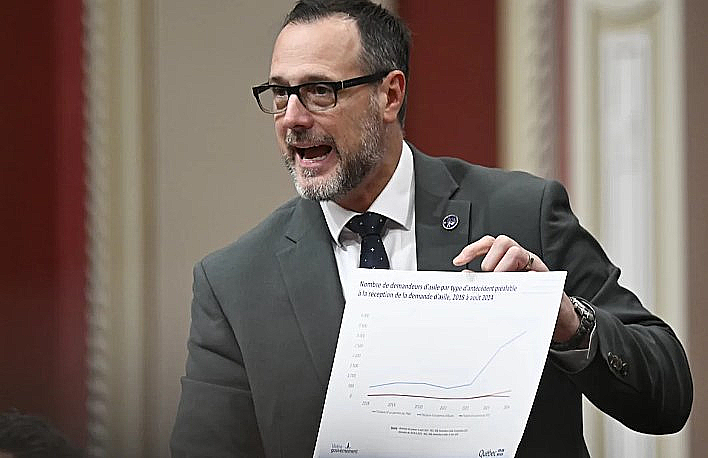
Rising tensions between Quebec and Ottawa reveal deep divisions over asylum seeker management. According to Quebec, the province is overwhelmed both financially and socially. Therefore, it urges Ottawa to reimburse expenses and share responsibilities more fairly. Moreover, the Legault government’s threat to cut social assistance highlights the growing strain within Canada’s federal system and underscores ongoing debates about immigration policy and provincial-federal relations.
Reasons behind quebec-ottawa dispute on asylum seeker funding

Quebec is threatening Ottawa with cuts to social assistance for asylum seekers. The provincial government demands immediate reimbursement for costs caused by “the sustained arrival of a significant number” of newcomers, according to a letter sent to the Canadian Minister of Immigration. In response, Immigration Minister Jean-François Roberge urges Ottawa to accelerate asylum processing and ensure a fairer distribution of asylum seekers among provinces. Otherwise, he warns that Quebec will take measures to make the province less attractive to newcomers. Roberge claims the federal government is failing to respect provincial capacity and the population’s ability to accommodate asylum seekers, highlighting growing tensions within Canada’s immigration system.
Human realities and social tensions over Quebec and Ottawa
Quebec says the influx of asylum seekers strains its reception capacity. The province warns it has become “too attractive” for its resources. Estimates for 2024 put the cost at $733 million, including $500 million for social assistance alone.
Faced with this burden, Immigration Minister Jean-François Roberge repeats his threat to cut social aid. The measure aims to encourage relocation of newcomers to other provinces. He also urges Ottawa to take concrete steps for a fairer distribution of asylum seekers across Canada. This highlights the growing pressure on both provincial resources and the federal immigration system.

The asylum issue also exposes social tensions. Roberge cites Quebecers’ daily frustrations:“I’m thinking of Quebecers who say: ‘Yes, but I live here, I pay taxes, I can’t see a doctor, and my children are in modular classrooms.’”Human rights organizations warn of potential humanitarian consequences. Stephan Reichhold states that without social assistance, “we’ll end up with encampments under the Metropolitan Expressway.”Critics accuse the government of exploiting discontent. Lawyer Stéphanie Valois emphasizes:“Asylum seekers are not responsible for the teacher shortage; we need to stop blaming them for everything.”The government’s rhetoric also creates hierarchies among immigrants. Comparing temporary workers to “cutting one’s hair” and asylum seekers to “cutting off an arm” polarizes debates about fairness and responsibility.
Political and symbolic consequences
The immigration debate in Quebec is both political and symbolic. Since his re-election, Premier François Legault has not upheld his pledge to cap permanent immigration at 50,000 a threshold he previously described as “suicidal” for Quebec.This shift puts the CAQ in a difficult position. During the same campaign, the Parti Québécois proposed a cap of 35,000 now under consideration.Quebec uses the threat of service reductions as leverage with Ottawa. The government says it “cannot rule out reviewing the benefits package for asylum seekers” if demands are not met.
About The Author


