Canadians leaving ERs highlight rising wait-time crisis

Canada’s emergency departments are facing a critical breaking point. In 2024 alone, nearly half a million Canadians leaving ERs before ever seeing a doctor. What was once a rare occurrence has become a powerful warning sign of a health system that can no longer keep pace with demand. This growing trend doesn’t just reflect overcrowded hospitals. It reveals human stories, dangerous delays, and a rising loss of confidence in a system designed to provide urgent care to everyone, regardless of circumstance. In this long-form analysis, we explore why so many patients are walking out, which provinces are most affected, and how these extended wait times are leading to tragic — and sometimes fatal — consequences.
A sharp rise across the country

New data shows that between 5% and 15% of ER visitors left before seeing a physician in 2024 — a dramatic increase compared to pre-pandemic levels. Some provinces stand out sharply:
- Prince edward island: ~14% — the highest rate in Canada
- Manitoba: ~13%
- New Brunswick: ~12%
- Ontario: ~5% — the lowest, but still rising
In 2019, most provinces recorded less than 10% walkouts. Today, that threshold is surpassed almost everywhere. In some regions, such as Newfoundland and Labrador, the number of departures has nearly doubled in just five years.
Emergency physicians often describe patient walkouts as a real-time indicator of system stress. According to Dr. Fraser MacKay, an emergency doctor in New Brunswick:
“It’s rare to go through a shift without seeing someone who was here the day before, left because they couldn’t wait, and now returns sicker than before.”. The message is clear: when patients flee the ER out of frustration, the system is no longer functioning as intended.
Why are so many canadians leaving ERs?
Behind the rising walkout rates lies a mix of structural issues that have built up over years. In many regions, patients wait several hours to see a doctor. Some wait eight hours or more just for an initial assessment. These delays have increased steadily from coast to coast. A major cause of ER congestion is the growing number of “boarded patients.” These patients are admitted but remain in the ER until a bed opens. When inpatient beds are full, ER stretchers serve as temporary holding areas.
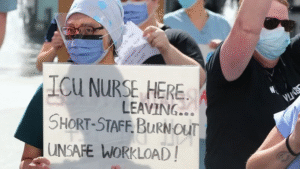
This reduces space and stretches staff even thinner. Canada also faces a shortage of emergency physicians, nurses, technicians, and support staff. Retirements, burnout, and recruitment challenges leave many ERs struggling to maintain safe staffing. Millions of Canadians lack a family doctor. With less access to primary care, many turn to emergency departments for issues clinics should handle. This adds extra pressure on already overwhelmed ERs.
.
The human cost: lives put at risk
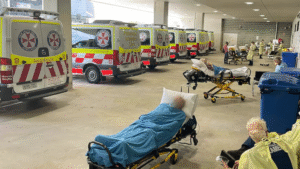
Leaving the ER without being examined isn’t just a statistic — it leads to real suffering, delayed treatment, and in some heartbreaking cases, preventable death.
Susan’s story: an appendicitis that nearly turned fatal
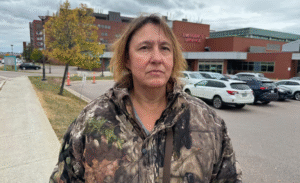
In New Brunswick, around 60,000 people left ERs before being seen in 2024. Among them was Susan Gordon, 51. She arrived by ambulance with severe stomach pain and continuous vomiting. After three hours waiting in what she described as a “chaotic” environment, she left — hoping rest would help. Weeks later, she collapsed and required emergency surgery for advanced appendicitis. Looking back, she admits:
“I put myself in jeopardy.”. Her case illustrates how long waits can push patients to make dangerous decisions.
The tragic death of 16-year-old finlay

One of the most devastating cases linked to long wait times is that of Finlay van der Werken, a teenager from Ontario. Experiencing intense abdominal pain, he was triaged as a Level 2 emergency, meaning he should have been seen within 15 minutes. Instead, Finlay waited over eight hours. During that time, his vital signs worsened significantly. He developed severe sepsis and went into cardiac arrest. Despite doctors’ efforts, Finlay did not survive. His parents have launched legal action and are calling for finlay’s law, a set of reforms that would establish maximum wait times for children in emergency departments. Their petition has gathered tens of thousands of signatures.
How provinces are responding at fact that Canadians leaving ERs ?
Governments across Canada acknowledge the crisis, but their solutions vary in scale and impact. In Prince Edward Island, PEI is trying to reduce walkouts by increasing hospital staffing. The province is also connecting more residents to family doctors, nurse practitioners, and virtual-care services. In Manitoba, officials are expanding both bed capacity and staffing. Since late 2023, Manitoba has added over 320 fully staffed hospital beds and welcomed more than 3,400 new health-care workers.
In New Brunswick, authorities are working to improve hospital patient flow. They also aim to reduce reliance on emergency rooms for primary care. In Ontario, the province reports over $44 million invested to address ER wait times, improve scheduling, and expand access to family physicians. However, questions remain about how much of this funding directly tackles boarded patients, a major source of delays.
.
Many Canadians leaving ERs: a national challenge that requires national solutions
Canada’s ER crisis is not the result of a single problem. It stems from overlapping weaknesses: limited primary care access, workforce shortages, aging infrastructure, increased demand, and a lack of coordinated national planning. Experts warn that if large-scale reforms are not implemented soon, wait times could continue to grow — putting even more patients at risk.
The fact that nearly 500,000 Canadians left emergency rooms before being examined by a physician is far more than a troubling statistic. It is a wake-up call. Each one of these individuals represents a moment of frustration, fear, pain, or desperation — and in some cases, a tragedy that might have been avoided. Fixing the ER crisis will require more staff, more beds, improved access to family doctors, and a fundamental rethinking of how emergency care operates nationwide. Many initiatives are underway, but health-care workers, patients, and families agree: there is still a long road ahead. For grieving families like Finlay’s, the fight continues — with the hope that no other parent will endure what they have lived.
About The Author