
Canada Under Mark Carney: A Strategic Political Shift
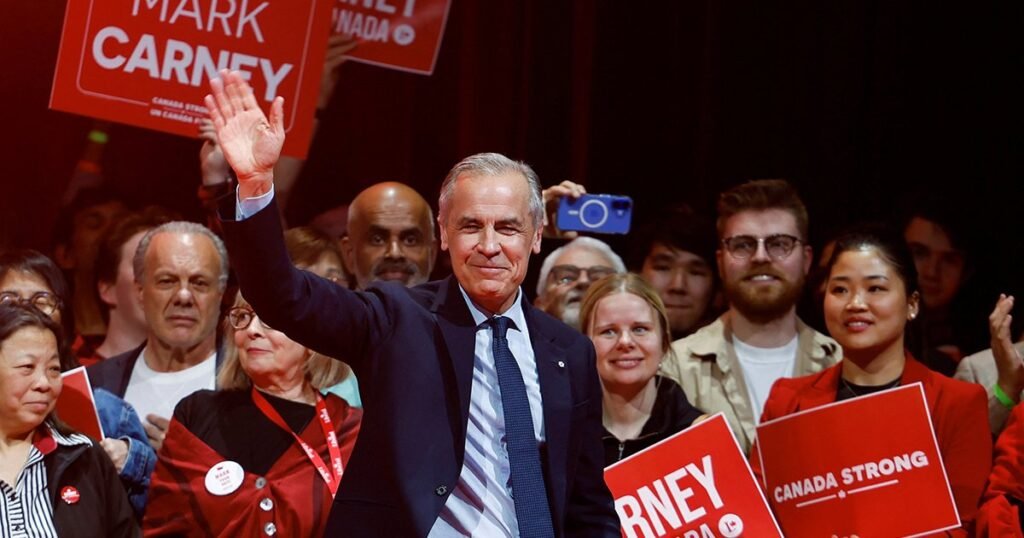
Canada under Mark Carney in 2025 marks a major turning point for the country’s political landscape. Carney, former governor of both the Bank of Canada and the Bank of England, takes leadership at a time when the nation faces trade tensions with the United States, a slowing economy, fragile inflation, and rising international pressure on key strategic issues. His leadership is presented as pragmatic, focused on financial stability, fiscal credibility, and a renewed strategic vision for Canada’s role in the world.
Defense Spending under Canada under Mark Carney
One of Carney’s most striking decisions is the unprecedented expansion of defense spending. The government plans to raise the military budget to 5% of GDP by 2035, a historic increase driven by growing Arctic tensions and stronger expectations from NATO.
Ottawa argues that this shift is essential to modernize Canada’s military, strengthen territorial sovereignty, and respond to contemporary threats such as cyberattacks, geopolitical instability, and energy security risks. However, several provinces fear that these investments will divert funds away from health care, education, and social services, fueling a heated national debate.
Infrastructure Investments to Revive the Economy
To address an economy weakened by inflation and U.S. trade barriers, Mark Carney promotes a growth strategy centered on major national infrastructure projects. Key initiatives include the development of a large LNG (liquefied natural gas) site, new critical mineral mines, a small modular nuclear reactor, and the modernization of strategic port infrastructure.
These investments aim to boost energy independence, attract foreign capital, and create thousands of jobs. The government also emphasizes the absence of new oil pipelines, seeking to balance economic development with climate commitments. Environmental and Indigenous groups, however, demand stronger guarantees regarding ecological impacts and the protection of territorial rights.
A More Independent and Assertive Diplomacy
Carney’s government adopts a firmer and more independent tone in foreign policy. The decision to announce future recognition of the State of Palestine, even at the risk of straining relations with Washington, clearly signals this diplomatic shift.
Canada under Mark Carney aspires to reposition itself as a global actor capable of defending humanitarian values while asserting its own strategic interests. This new approach reflects an ambition to restore Canada’s influence in international debates on human rights, peacebuilding, economic governance, and climate change.
Economic Outlook under Canada under Mark Carney
Economically, the government must navigate inflation that has eased to around 2.4% but remains volatile. To support growth, the Bank of Canada recently lowered its policy rate to 2.25%, indicating persistent concerns about an economic slowdown.
Domestic pressures remain strong: high housing costs, weakening household consumption, and slower exports due to trade tensions. Forecasts point to moderate or low growth in the short term. The strategy of Canada under Mark Carney relies on a delicate balance: using large-scale investments to strengthen the economy over the long term, while keeping public debt under control and maintaining the confidence of financial markets.
About The Author


