
Is Canada a good student in the fight against climate change?
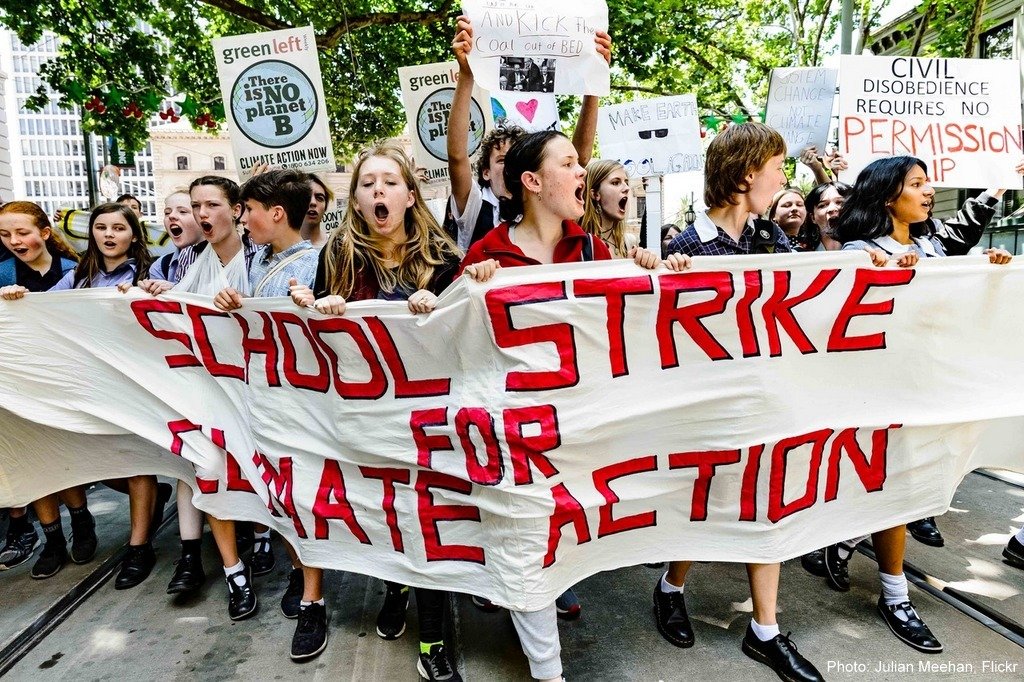
Ten years after the signing of the Paris Agreement, can Canada truly claim to be a “good student” in the fight against climate change ? Despite Prime Minister Justin Trudeau’s ambitious pledge to reduce greenhouse-gas (GHG) emissions by 40 % to 45 % by 2030, the country is still struggling to reconcile economic growth with the ecological transition.
From Promise to Performance: Canada’s Path in the Global Climate Fight.
At the 2015 Paris Conference, Canada set bold targets in the fight against climate change. Ottawa committed to reducing its GHG emissions by 30 % by 2030 compared with 2005 levels. Concretely, this meant reducing emissions from 738 megatons of CO₂ to 524 megatons, a drop of 214 megatons.
However, when using the year 1990 as a reference point of the baseline year under the Kyoto Protocol, which Canada ratified in 2005 the reduction amounts to only 14.5 %. This gap highlights the difficulty Canada faces in aligning its climate commitment with its heavy dependence on natural resources and fossil fuels in producing provinces such as Alberta. Although some progress has been made in the energy transition, achieving the 2030 target still appears unlikely without a major acceleration of efforts.
Canada: A unifying country in the international fight against climate change.
Canada positions itself as a “facilitator” in the international fight against climate change. On the eve of COP30, Ottawa asserts that it wants to help other countries reach consensus and mobilize additional climate financing.
To this end, the Canadian government announced it will double its international climate assistance, raising it from CAD 2.65 billion (2015-2021) to CAD 5.3 billion for the period 2021-2026.
However, despite this international posture, the assessment of Canada’s contribution remains critical: according to the Climate Action Tracker, Canadian participation in climate financing is “highly insufficient.” The duality of a declared leadership role, yet modest national results perfectly illustrates the Canadian paradox: aiming to be a model in the fight against climate change while not yet fully aligning domestic actions with that objective.
While Canada aspires to be a driving force in the global fight against climate change, its national results to date are modest: with only an 8.5 % reduction in emissions since 2005, the goal of 40 % to 45 % by 2030 still appears out of reach without a strong acceleration of efforts.
About The Author


